Can vegans get sufficient vitamin B12 from kombucha alone?

Answer: Probably not (unless you’re drinking a B12 fortified kombucha).

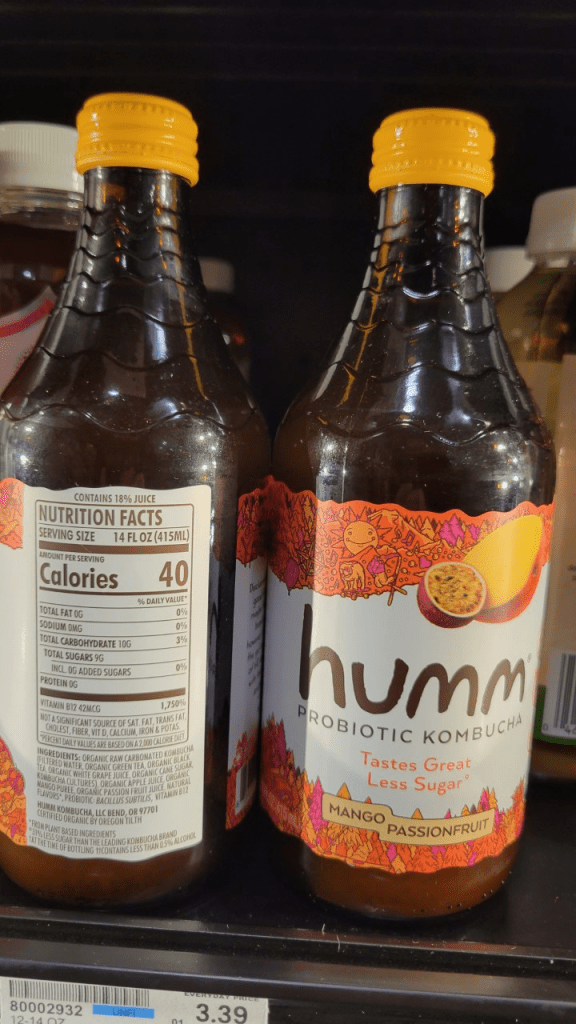
One of my friends, who is a vegan, mentioned recently that kombucha might be a good source of vitamin B12. Confusingly, when we went to a local market, we encountered numerous brands of kombucha that did not mention vitamin B12 on the nutrition label. Only a single brand had a substantial amount of Kombucha (Humm). We couldn’t figure out why this brand was different – if it was a special SCOBY they used or some other production secret.

Humm Kombucha. Note the Vitamin B12 content of 1750%…

As a brief introduction, kombucha is tea fermented with co-cultures of yeast and bacteria. The specific yeast and bacteria vary from study to study but almost always include the bacteria Komagataeibacter xylinus (formerly Gluconacetobacter xylinus). This bacteria ferments alcohols produced by other yeasts into organic acids such as acetic acid, which increases kombucha acidity and limits ethanol content. For those interested Jayabalan et al. review the microbiology and composition of kombucha. In their review, Jayabalan et al. discuss an older study by Bauer-Petrovska et al. quantifying water-soluble vitamins in kombucha. This study showed that kombucha made with black tea and sucrose contained ” vitamin B1 74 mg/100 mL, vitamin B6 52 mg/100 mL, vitamin B12 84 mg/100 mL, and vitamin C 151 mg/100 mL.” A typical 16 fluid ounce container of kombucha is around 500 mL (473.2 mL), for an estimated 400 mg of vitamin B12 per bottle. The recommended daily allowance of vitamin, B12 is 2.4 mcg/day so a bottle should exceed the RDA by an astounding 166,000 times. A more recent study from Turkey by Arikan et al. determined that the mechanism was biologically plausible; Komagataeibacter indeed “carrries complete pathways for the biosynthesis of vitamin B1, vitamin B7, vitamin B12 “

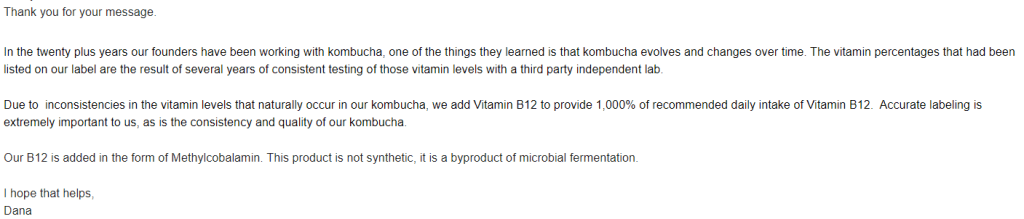
Wanting to investigate this further, we directly contacted Humm. To our surprise, we actually received a reply! It turns out that “due to inconsistencies in the vitamin levels that naturally occur in our kombucha, we add Vitamin B12 to provide 1,000% of recommended daily intake of Vitamin B12.  Accurate labeling is extremely important to us, as is the consistency and quality of our kombucha.” It’s like the natural variability was also too high from other brands that did not supplement vitamin B12 to make any claims on the nutrition label. The full reply from Humm is below:

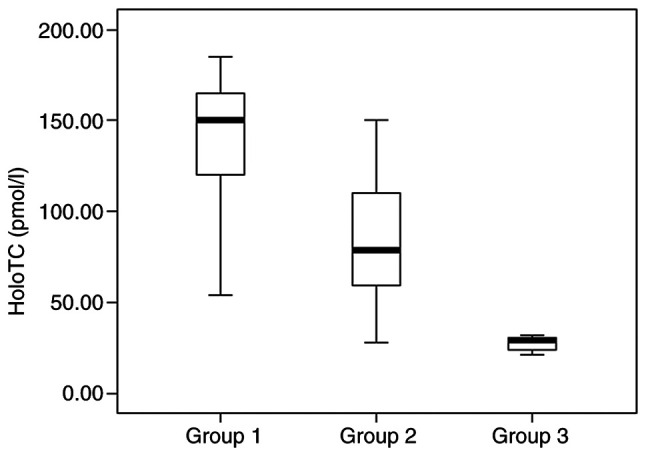
Of course, this doesn’t indicate whether or not kombucha is a good source of B12 in practice. A small study (n=42) from Romania by Zugravu et al. compared different strategies of vitamin B12 supplementation in vegans. This study found that vitamin B12 supplementation was superior to supplementation with alternative products (algae, kombucha, other fermented products).

Values of serum transcobalamin in vegans who supplemented with cyanocobalamin (group 1), methylcobalamin (group 2), and natural products (group 3). Source: Zugravu et al. Figure 1

My overall conclusion is that for vegans, vitamin B12 supplements are probably still superior to drinking kombucha alone. Although the mechanism of vitamin B12 in kombucha is plausible, the response from Humm suggests that actual vitamin B12 levels in Kombucha vary wildly in practice. Furthermore, the limited clinical evidence seems to suggest that vitamin B12 supplements are superior to alternative strategies of supplementation.

Note: Humm’s email also mentions they supplement with the “natural” form of vitamin B12, methylcobalamin. Cyanocobalamin (often derided as “synthetic” B12) is readily converted to methylcobalamin in the body. Per Zugravu et al., cyanocobalamin supplementation was actually superior to methylcobalamin supplementation for maintaining serum B12 levels.

References:

  1. https://www.reddit.com/r/Kombucha/comments/6op8kd/why_does_humm_kombucha_have_such_insane_amounts/
  2. Jayabalan R, Malbaša RV, Lončar ES, Vitas JS, Sathishkumar M. A Review on Kombucha Tea-Microbiology, Composition, Fermentation, Beneficial Effects, Toxicity, and Tea Fungus. Compr Rev Food Sci Food Saf. 2014 Jul;13(4):538-550. doi: 10.1111/1541-4337.12073. PMID: 33412713.
  3. Arıkan M, Mitchell AL, Finn RD, Gürel F. Microbial composition of Kombucha determined using amplicon sequencing and shotgun metagenomics. J Food Sci. 2020;85(2):455-464. doi:10.1111/1750-3841.14992
  4. Zugravu CA, Macri A, Belc N, Bohiltea R. Efficacy of supplementation with methylcobalamin and cyancobalamin in maintaining the level of serum holotranscobalamin in a group of plant-based diet (vegan) adults. Exp Ther Med. 2021;22(3):993. doi:10.3892/etm.2021.10425

Do students perceive they learn more by lectures or active learning?

Short answer: Students perceive they learn more by lectures. However, students actually learn more by active learning!

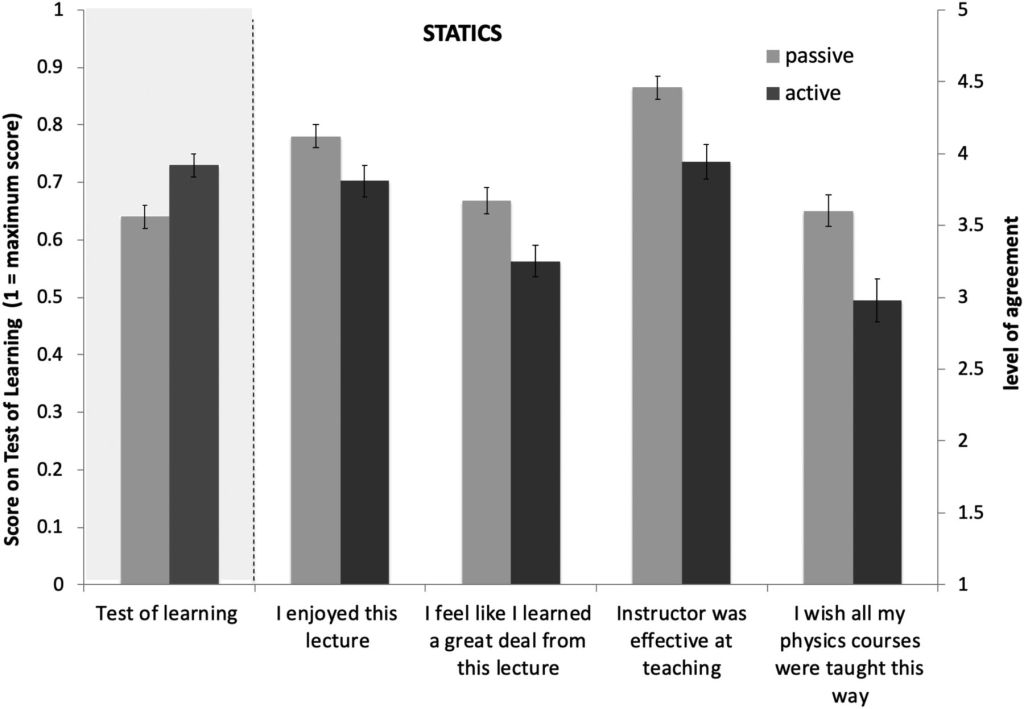
I recently came across a PNAS paper comparing active to passive learning for college students taking an introductory physics course at Havard (Deslauriers et al. PNAS 2019) [1]. In short, active learning has long been known to be superior to passive learning (e.g. lectures); however, STEM instructors generally choose traditional teaching methods. To investigate this discrepancy, the researchers randomly assigned students (total n = 157) to active learning (group problem-solving session) and passive learning groups (lectures). Students tended to prefer passive learning and felt like they were learning more from lectures (higher perception of learning). However, students in the active learning group actually performed better on tests. The researchers hypothesize that the increased cognitive load of active learning may have led to decreased perception of learning.

Figure 1 reproduced from Deslauriers et al. Comparing test scores and survey questions assessing the feeling of learning in active and passive learning groups.

Personally, this research was quite concerning. Most of my learning is passive – especially from lecturers who excel at addressing misconceptions (thus depriving me of the chance to actively clear up misunderstandings or construct my own opinions). This phenomenon may also explain why medical students tend to better remember diseases that they have seen in an actual patient, rather than only read about in a textbook. This gap between the perception of learning and actual learning is not only a problem for aspiring physicists and medical students, but also for patients.

It is not uncommon to hear a patient say, “He didn’t tell me anything,” when describing an encounter with their physician. So either the specialist did not explain things well, or the patient did not hold onto the details. Patients typically do a good job of following what is being said while it is being explained. However, they may not be able to recall the details of the discussion later.

Rishi Gupta, Reflections of a Pupil, Page 157.

This quote comes from Dr. Rishi Gupta’s book, Reflections of a Pupil, a compilation of life lessons from a vitreoretinal surgeon in Halifax. At first, the book may seem to only contain platitudes and obvious advice (treat patients like how you would treat a family member, constantly strive for self-improvement or you’ll be left behind, never operate on the wrong eye). Nonetheless, the book grew on me for the following reasons:

  1. There is great value in reviewing life lessons through the lens of a more experienced surgeon’s perspective
  2. The book helps one understanding implicit values held by senior physicians.
  3. Obviously, I haven’t had the opportunity to reinforce each pearl in the book through real life examples – and while the specifics might differ for every trainee – these “missed” lessons are precisely the most important to pick up on! For example, I will never say “oops “again in the operating room…

If you don’t believe the perspective of a medical student, Dr. Uday Devgan of CataractCoach fame gives a glowing review of the book below.

Anyways, Dr. Gupta continues the quote above with an especially apt analogy: “I liken this to being driven through an unfamiliar area of town. We all follow the left or right turns as they are happening. However, when asked to drive that same route again on our own, many of us would have a tough time.” A few suggestions (from Dr. Gupta and other research) to combat this discrepancy between perceived and actual learning in patients:

  1. Summarize every encounter with a few bullet points and a brief plan so patients don’t lose sight of the bigger picture.
  2. Provide handouts that patients can slowly digest at home with the help of their friends/family/the internet.
  3. Encourage patients to teach back what they have understood (this can be time consuming though!).
  4. Reinforce the same concept multiple times. Don’t be afraid to bring patients back for a second visit.
    1. People tend to remember the gestalt of a visit (how they felt) more than the specific information given. Ensuring patients feel like their concerns are being heard at the initial visit 1) more likely they will return 2) less likely to file a malpractice claim

For those interested in other suggestions for promoting active learning for students in general, this Edutopia article provides suggestions such as:

  1. highlighting the benefits of active learning to students
  2. encouraging students to see the struggle of learning as productive
  3. helping students develop metacognitive skills to more accurately gauge their own level of understanding.

References

  1. Deslauriers L, McCarty L, Miller K, Callaghan K, Kestin G. Measuring actual learning versus feeling of learning in response to being actively engaged in the classroom. Proceedings of the National Academy of Sciences. Sep 2019, 116 (39) 19251-19257; DOI: 10.1073/pnas.1821936116
  2. Gupta, Rishi. Reflections of a Pupil. Pages 155-158.
  3. Huntington B, Kuhn N. Communication gaffes: a root cause of malpractice claims. Proc (Bayl Univ Med Cent). 2003;16(2):157-161. doi:10.1080/08998280.2003.11927898
  4. https://www.edutopia.org/article/students-think-lectures-are-best-research-suggests-theyre-wrong

Note: I feel like my introduction to the Deslauriers et al. paper may have come from some popular STEM Youtuber, IFL Science, or just something random on Twitter. Apologies I’m unable to remember the exact source, but I won’t pretend I remember this paper from a careful perusal of the primary literature about learning.

Note 2: The research of Deslauriers et al. is similar, but not entirely the same as the illusion of explanatory depth (which is more just a metacognitive deficit/ bias).

How can a trial say you are both more and less likely to die after an intervention?

Short answer: Composite endpoints

Medium answer: Many clinical trials report composite outcomes such as: “stroke, acute coronary syndrome (acute myocardial infarction and hospitalization for unstable angina), acute decompensated heart failure, coronary revascularization, atrial fibrillation, or death from cardiovascular causes.” [1] In this particular trial evaluating blood pressure control regimens in 9,624 Chinese adults, the primary composite outcome favored more aggressive control (hazard ratio [HR] 0.74, 95% CI 0.60-0.92, p = 0.007). However, all-cause mortality was actually increased in the intense treatment group, although not significantly so (HR 1.11, 95% CI 0.78-1.56). While not a particularly striking example (I just clicked on a random recent paper in NEJM), one can imagine this being very confusing to patients. To paraphrase a hypothetical scenario from a review on composite outcomes in the BMJ:

“Mr. Chen, here is a drug that will reduce your combined risk of getting a heart attack that will not kill you, stroke, specific arrythmias, or of dying from heart disease.”

“Doctor, I am not sure I quite understood you, but please give me this drug.”

“But I should also mention that the drug will increase your risk of dying.”

“Didn’t you just tell me that the drug would decrease my risk of dying? I am confused.”

Adapted from Cordoba et al. [2]

Full Answer: The American Heart Association meeting took place from 11/16/21-11/18/21 and there has been a rush of medical podcasts based on the content from this meeting. Full disclosure: as an aspiring ophthalmologist, my working knowledge of body medicine is to “keep the heart full of blood, keep the lung full of air.” Nonetheless, while skimming some of the papers from the AHA meeting, I was once again reminded of the preponderance of composite outcomes in clinical trials.

In particular, I was thinking about a paper I presented at rounds a few weeks ago, EMPEROR-Preserved, (Empagliflozin in Heart Failure with a Preserved Ejection Fraction), published in NEJM in August 2021. Empagliflozin (Jardiance) an SGLT-2 inhibitor, has already been shown in the EMPEROR-reduced trial to have benefit in all HFrEF patients regardless of type 2 diabetes (T2DM) status. This double-blind trial compared empagliflozin 10mg vs. placebo (in addition to usual therapy) in approximately 6000 patients with HFpEF (EF >= 40, NYHA II-IV) assessing for a primary outcome of cardiovascular death or hospitalization for HF. About 50% of patients in both groups had T2DM at baseline. Primary outcome in 13.8% in empagliflozin group vs 17.1% in placebo group (HR 0.79, NNT = 31). This benefit was seen in patients with and without diabetes (Table 2). The benefit was driven by decreased hospitalizations (8.6% vs 11.8%, HR 0.71), but no benefit was seen for cardiovascular death (7.3% vs 8.2%, HR 0.91 [CI 95% 0.76-10.9]). Adverse effects of UTI and genital infections are more common in the empagliflozin group. For this group of patients in which there have been so few effective treatments, SGLT-2 inhibitors are certainly a game-changer. However, I couldn’t help but think that the trial would have been even more convincing if it had been powered to detect benefit in either cardiovascular or all-cause mortality alone.

The question of composite outcomes has plagued the field for a long time. For example, the recent ASCNED trial showed that aspirin was not shown to significantly decrease the risk of developing dementia in diabetics. This work reminded me of some of the original work on aspirin for primary prevention of CV events in diabetics (Ogawa et al. JAMA 2008). Cordoba et al. singled out this study for particularly egregious abuse of composite outcomes:

Because components can be combined in so many ways, it is easy to find significant results. In one of the trials we included (Ogawa et al.), the composite consisted of eight cardiovascular end points, but there were also secondary composites that consisted of “combinations of primary end points as well as death from any cause.” These combinations were not specified, but nine end points can be combined, as two or more components, in 502 possible ways (29−1(empty sample)−9(samples with only one component)). The result for the composite was not statistically significant, but the abstract noted that the hazard ratio was 0.10 for a combined end point of fatal coronary events and fatal cerebrovascular events (P=0.0037)—that is, a cherry picked result. One would expect 25 of 502 possible combinations to be significant purely by chance.

Unsurprisingly, more modern evidence has suggested aspirin may be of much more limited benefit than described in this study for primary prevention (note: this is not true for secondary prevention – don’t stop taking aspirin without asking your doctor!) The US Preventive Services Task Force no longer routinely recommends aspirin in patients younger than 50 or older than 60. Similarly, AHA guidelines say to not be given routinely to adults over 70 or at increased risk of bleeding (diabetes or not).

As another recent example highlighted by Dr. Mandrola in This Week in Cardiology, the AVATAR trial asked whether surgical aortic valve replacement is indicated for asymptomatic patients with severe aortic stenosis by ultrasound criteria. 157 patients were randomized in this trial to early surgery vs conservative treatment with a median follow-up of 35 months. The primary outcome was a composite of all-cause mortality, acute MI, stroke, and hospitalization for heart failure. The primary composite outcome favored early surgery (HR 0.46, 95% CI 0.23-0.90, p = 0.02). However, cardiovascular death did not differ between the two groups (HR 1.02, CI 0.40-2.58), while all-cause mortality strongly favored early surgery (HR 0.56, CI 0.24-1.27, 16 vs. 9 patients.). Turns out, 3 patients in the conservative management group died of COVID-19 – if two of these patients had been in the early surgery arm, the trial would not have been significant.

Some final thoughts on composite outcomes:

  1. Studies need to be better powered. Clinical trials are experiments on human beings! If we are going to do that, we must strive to get a clear answer on a meaningful clinical question.
  2. Studies should assess composite endpoints with fewer components (corollary of running better powered studies). Dr. Gregg Stone (EXCEL trial lead discussed below) even acknowledges the importance of doing so in a panel last year.
  3. If composite endpoints are necessary, studies should seek to ensure components of composite outcomes are both objective, clinically relevant, and of equal importance. This means avoiding lumping death together with outcomes like silent MIs, TIA, or doubling of baseline creatinine. It also means carefully considering if all-cause mortality, cardiovascular mortality, or cardiovascular mortality in patients proven to be COVID-19 positive is the more appropriate outcome depending on the clinical context.
  4. We need to do a better job of communicating outcomes of trials to patients. This goes beyond simply explaining what composite outcomes mean – we should also consider making explicit the value judgments baked into things like:
    • unequal impact of components of composite outcomes on patients’ quality of lives
    • non-inferiority margins (What percent difference do we consider non-inferior?)
    • number needed to treat (What our threshold for an NNT small enough that we would recommend an intervention?)

For those interested in further reading – I’d recommend persuing the controversy around the EXCEL trial (Stone et al. NEJM 2016) and the recent meta-analysis of the evidence regarding PCI vs CABG (Sabatine et al. Lancet, 2021). This debate between surgeons and interventionalists highlights the challenge of interpreting trials in which the results of the primary composite outcome and all-cause mortality conflict. I may eventually write a separate post about this whole saga – but I feel like it is already well-contextualized/discussed in great detail in the linked articles.

If anybody is out there reading, I’d love to hear your thoughts on this. As an early-career trainee, I obviously haven’t been involved in actually designing these kinds of trials – and I’m always striving to learn how to more critically evaluate evidence.

References

  1. Zhang W, Zhang S, Deng Y, et al. Trial of Intensive Blood-Pressure Control in Older Patients with Hypertension. N Engl J Med. 2021;385(14):1268-1279. doi:10.1056/NEJMoa2111437
  2. Cordoba G, Schwartz L, Woloshin S, Bae H, Gøtzsche PC. Definition, reporting, and interpretation of composite outcomes in clinical trials: systematic review. BMJ. 2010;341:c3920. Published 2010 Aug 18. doi:10.1136/bmj.c3920
  3. https://www.youtube.com/watch?v=k8CG0QrEEcg
  4. Anker SD, Butler J, Filippatos G, et al. Empagliflozin in Heart Failure with a Preserved Ejection Fraction. N Engl J Med. 2021;385(16):1451-1461. doi:10.1056/NEJMoa2107038
  5. Packer M, Anker SD, Butler J, et al. Cardiovascular and Renal Outcomes with Empagliflozin in Heart Failure. N Engl J Med. 2020;383(15):1413-1424. doi:10.1056/NEJMoa2022190
  6. https://www.acc.org/latest-in-cardiology/clinical-trials/2018/08/25/02/16/ascend-aspirin
  7. Ogawa H, Nakayama M, Morimoto T, et al. Low-dose aspirin for primary prevention of atherosclerotic events in patients with type 2 diabetes: a randomized controlled trial [published correction appears in JAMA. 2009 May 13;301(18):1882] [published correction appears in JAMA. 2012 Nov 14;308(18):1861]. JAMA. 2008;300(18):2134-2141. doi:10.1001/jama.2008.623
  8. https://www.medscape.com/viewarticle/963288
  9. https://www.youtube.com/watch?v=tQPrXwlUFC4
  10. Banovic et al. Aortic Valve ReplAcemenT versus Conservative Treatment in Asymptomatic SeveRe Aortic Stenosis: The AVATAR Trial. Preprint in Circulation. https://www.ahajournals.org/doi/10.1161/CIRCULATIONAHA.121.057639
  11. https://www.tctmd.com/news/former-excel-investigator-alleges-trial-manipulation-prompting-vehement-denials
  12. Stone GW, Sabik JF, Serruys PW, et al. Everolimus-Eluting Stents or Bypass Surgery for Left Main Coronary Artery Disease [published correction appears in N Engl J Med. 2019 Oct 31;381(18):1789]. N Engl J Med. 2016;375(23):2223-2235. doi:10.1056/NEJMoa1610227
  13. https://www.tctmd.com/news/no-mortality-difference-between-pci-and-cabg-left-main-pci-meta-analysis
  14. Sabatine MS, Bergmark BA, Murphy SA, et al. Percutaneous coronary intervention with drug-eluting stents versus coronary artery bypass grafting in left main coronary artery disease: an individual patient data meta-analysis [published online ahead of print, 2021 Nov 12]. Lancet. 2021;S0140-6736(21)02334-5. doi:10.1016/S0140-6736(21)02334-5