Answer: Welcome Home, an adoption agency
I’ve been a little remiss about posting recently, with a graveyard of half-finished posts on over-ambitious topics such as migration to Ancient Hawaii and uranium-lead dating. To get back into the swing of writing, I plan on changing direction to focus on more recent adventures and reading.
Today, I had the chance to visit Doylestown, a quaint town of 8300 people that is about 25 miles north of Center City Philadelphia. While savoring a delicious mushroom pizza from local chain Jules Thin Crust, I discovered that Doylestown’s surprising roster of famous residents includes Stan and Jan Berenstain, Pearl Buck1, Margaret Mead, Stephen Sondheim, Oscar Hammerstein, and James Michener.
One unexpected connection between Buck, Michener, and Hammerstein was their collaboration in founding Welcome House in 1949, America’s first interracial, international adoption agency. This organization’s original intent was to help place Amerasian children into American homes.2 Welcome House facilitated over 7,000 adoptions before closing in 2014 due to changing regulations about adopting international children.
A much more well-known collaboration between James Michener and Oscar Hammerstein is South Pacific. This musical was loosely based on Tales of the South Pacific, a collection of stories about the Pacific Theater of World War II by Michener. As my girlfriend knows from my random humming, South Pacific also features one of my favorite love songs: “Some Enchanted Evening.”
“Some enchanted evening/ When you find your true love,…/Across a crowded room,/ Then fly to her side, / And make her your own / For all through your life you / May dream all alone. / Once you have found her, /Never let her go.”
Pure infatuation spun over lush orchestration, this song has been covered in a #1 hit by Perry Como, by Frank Sinatra, and in an Olivier-winning performance from Philip Quast.3
James Michener had a relatively atypical career path. After growing up in Doylestown, he attended college at Swarthmore, and then became an English teacher (including a stint as a guest lecturer at Harvard). Despite his Quaker upbringing, he enlisted in the US Navy during World War II and was assigned as a naval historian in the South Pacific. His wartime sketches eventually evolved into the Pulitzer Prize-winning collection Tales of the South Pacific. Despite publishing his first book at 40, he went on to write dozens of fiction and non-fiction works, which have collectively sold over 75 million copies. 4 He would use his royalties to endow various Philadelphia area organizations including the Michener Museum.
The museum, housed in a converted prison, primarily showcases leading Pennsylvania Impressionist artists, as well as the furniture of woodworker (and fellow MIT alumni) George Nakashima and some Michener memorabilia. Some of my favorite works included a Louis Bosa painting depicting the dismantling of the New York “El”, a beautiful table, and the whimsical sculpture by Wharton Esherick.
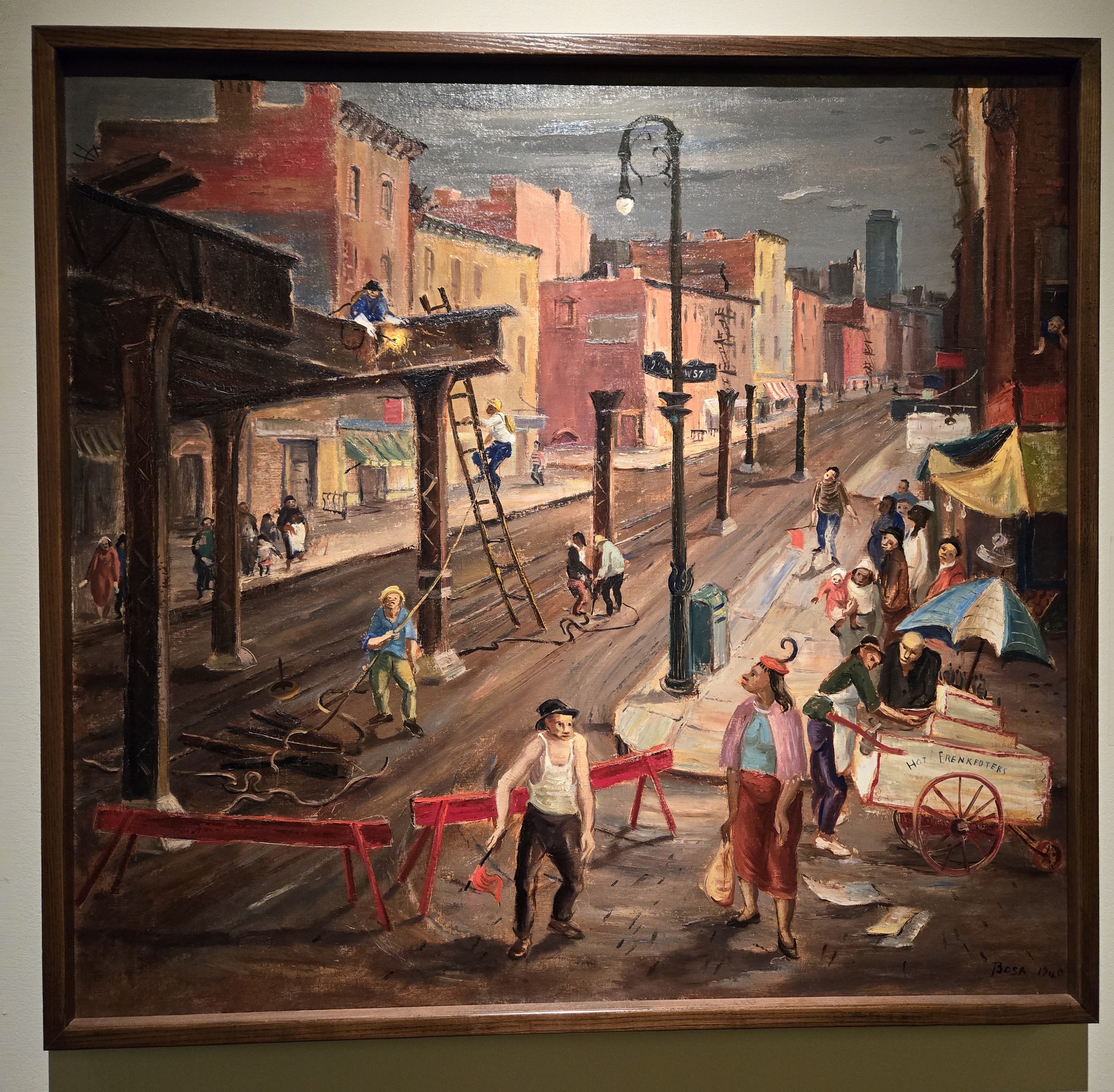
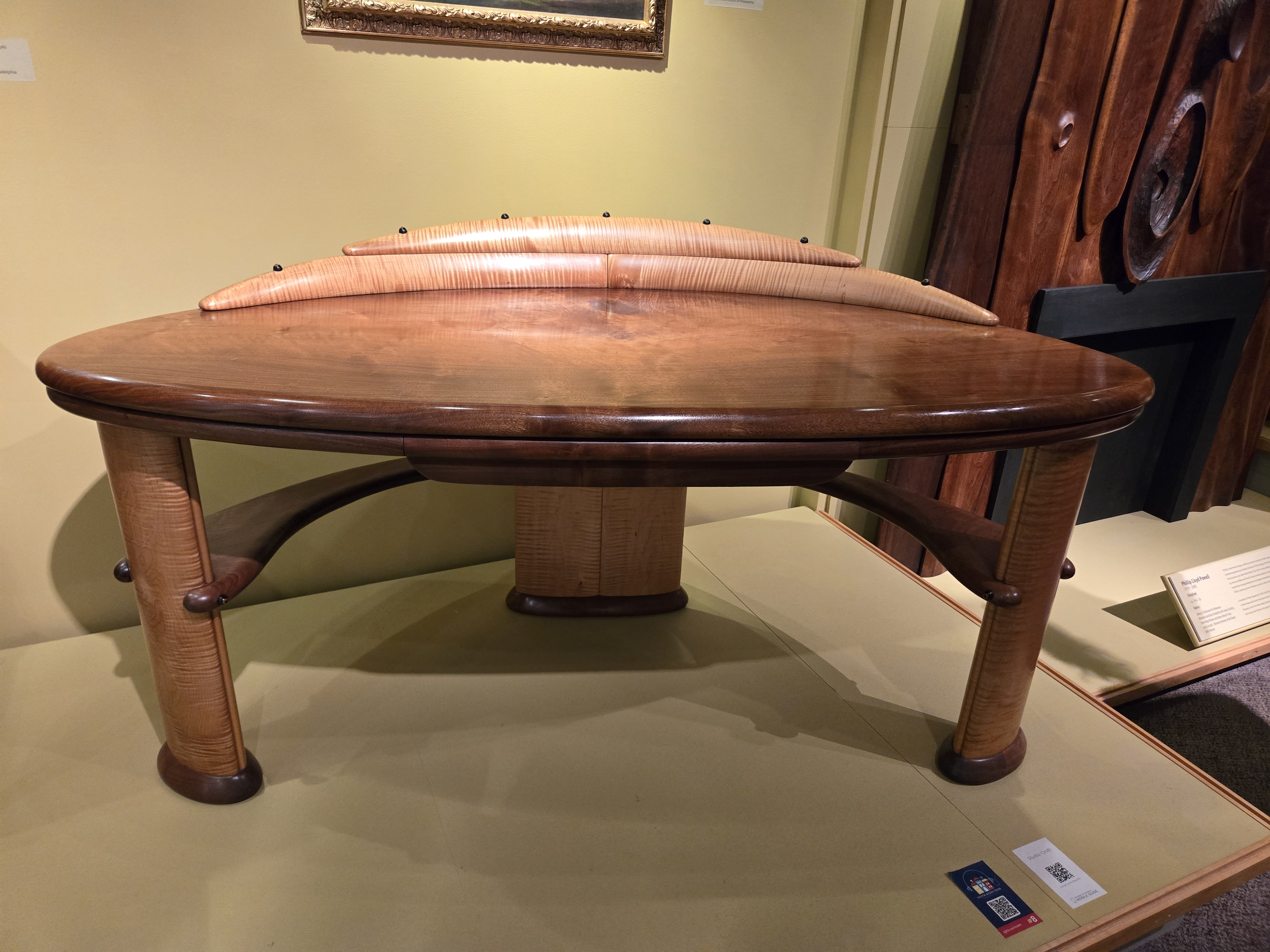
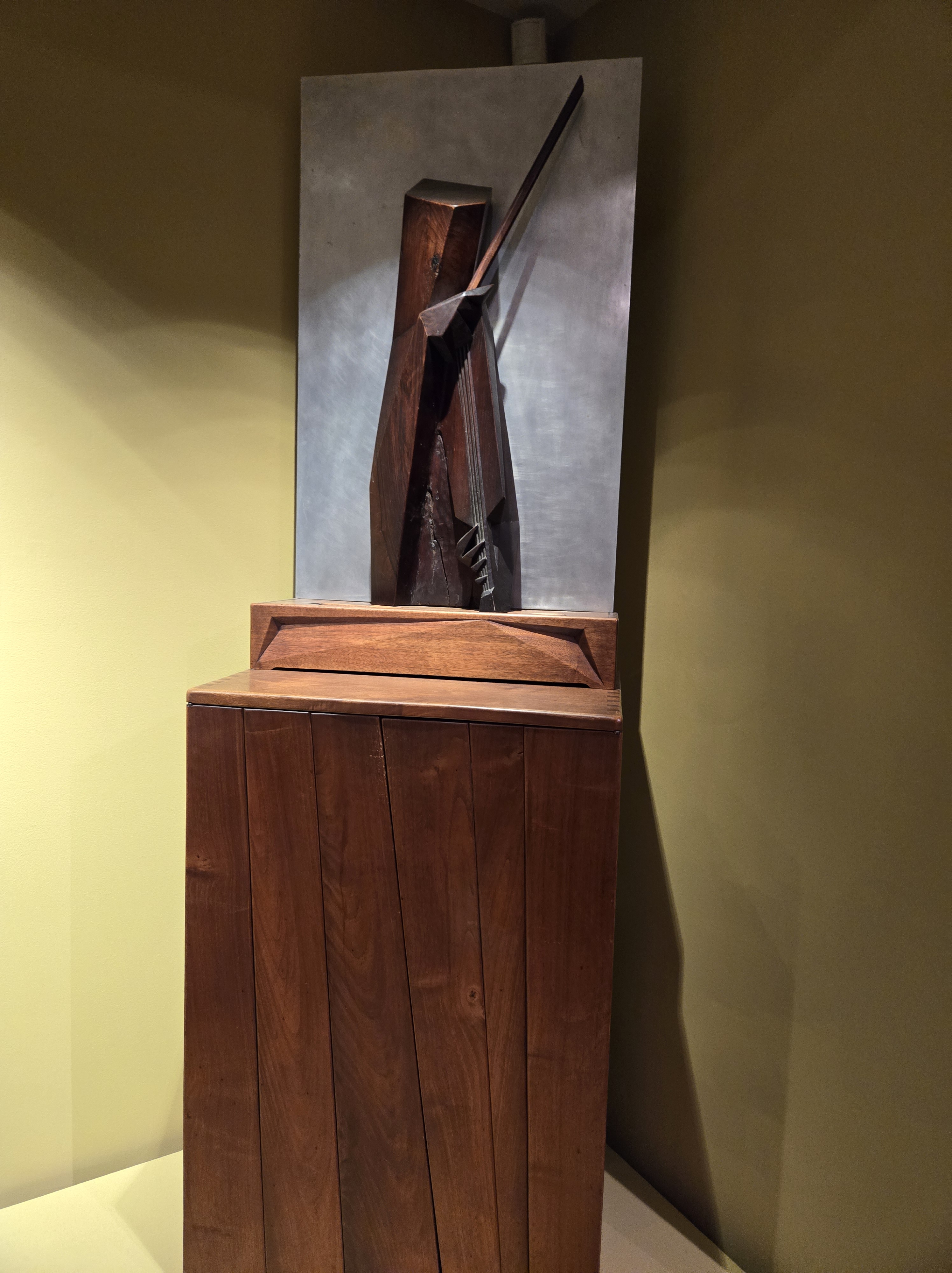
However, the most interesting exhibits focused on the sculptors Anthony Saint-Gaudens and Daniel Chester French. I will cover them further in my next post!
For now, I will leave us with this poignant portrayal of Abraham Lincoln by Saint-Gaudens. Something about this statue perfectly captures the weight of the personal tragedy and public responsibility thrust upon Lincoln, a harried man perpetually frozen in that liminal space between statically symbolizing past glory and inspiring us forward to greater heights.5

References
- https://en.wikipedia.org/wiki/Doylestown,_Pennsylvania
- https://pearlsbuck.org/about/welcome-house-search-information/
- https://www.vanityfair.com/style/2018/02/rodgers-hammerstein-michener-south-pacific
Footnotes
- Doylestown is also the capital of Bucks County. The county was named by William Penn for Buckingham County in England. Pearl S. Buck only coincidentally settled here; her husband, John Lossing Buck, was from New York. ↩︎
- I had never heard of Ameriasian as a term before. Apparently, it was coined by Pearl S. Buck and is codified into U.S Law as “[A]n alien who was born in Korea, Kampuchea, Laos, Thailand or Vietnam after December 31, 1950 and before October 22, 1982 and was fathered by a U.S. citizen.” Time restrictions aside, Sorrow from Madama Butterfly is probably the prototypical example. ↩︎
- An unpopular opinion of mine from high school was that Russell Crowe’s rendition of “Stars” from the Les Miserables movie was secretly excellent. While I still have a soft spot for Crowe’s Javert today, the definitive version 100% belongs to Philip Quast, For those who can’t choose, check out this mashup! ↩︎
- Stories like his are a helpful reminder that it’s never too late to make a contribution. It reminds me of the fascinating chart of Atlas of the Invisible (this book is essentially a hard-cover version of r/DataIsBeautiful) that showed the average age at the creation of an artist’s most famous work was around 40 (they sampled 88 well-known artists). Most famous work is obviously extremely subjective, but nice to feel like it’s not too late for a stroke of genius! ↩︎
- This statue reminded me immediately of Lincoln in the Bardo, which I absolutely recommend. ↩︎
 Tillaux's Thoughts